

Happy New Year, UNE families! A new semester is upon us, and with that comes an opportunity for me to offer ideas on ways to communicate with your student about starting the term with strategies that support their success.
Not unlike the resolutions some of us may commit to when the calendar hits January 1st, so too, do many of our students resolve to “try harder”. What do we know about resolutions though? To be most effective, they should be specific and actionable.
Simply saying we’ll prioritize our health isn’t as effective as, for example, committing to taking a walk for 20 minutes three times a week. The latter is specific and reflects an action we can more easily check off as ‘done’. In the same way, if you hear your student reflect that they’ll just “try harder”, I encourage you to ask them what that means. If they come up short, here are some ideas you might relay to help them think more strategically about what “trying harder” might actually look like.
- Block the same 30 minutes every Sunday to review all assignments for the week ahead. With this view of the week’s assignments, your student will be better positioned to make decisions about how they’ll manage their time.
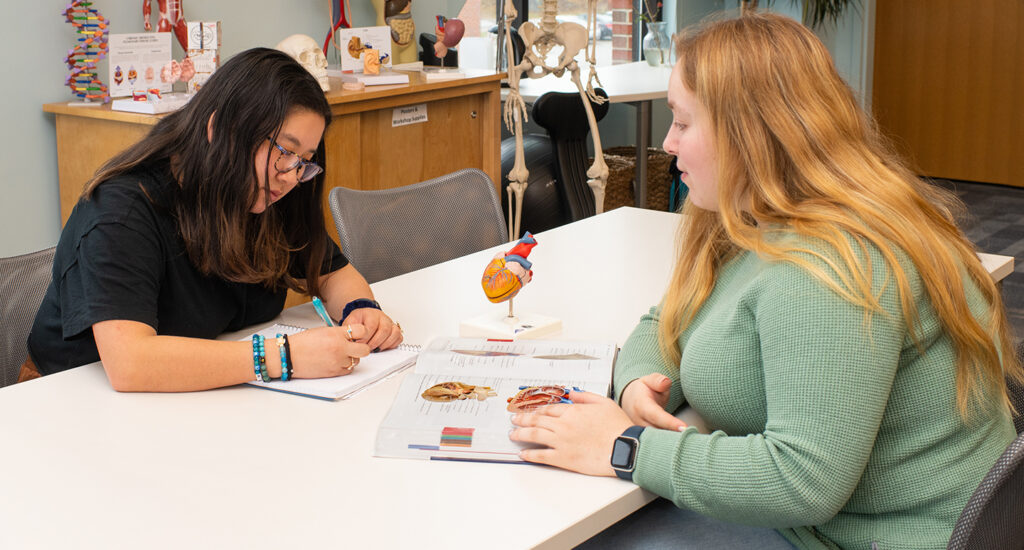
- Make an appointment with a Learning Specialist in our Student Academic Success Center to discuss study strategies. It’s possible your student is being tasked with consuming information in a way that’s unfamiliar (learn what a ‘flipped classroom’ is here). If they report feeling stuck or that they’re struggling with course content, working with a Learning Specialist could be the key to them acquiring additional tools that help them to be academically successful.
- Use one system for keeping track of important tasks. Whether it’s post-it notes, alarms set on their phone, or a planner they reference daily, knowing what works and sticking to it is an important life skill.
- Visit each of their faculty at least once during office hours and before they find themselves struggling. Our faculty want UNE’s students to be successful, but it’s harder for them to anticipate what your student may need if they haven’t had the opportunity to get to know them.
- Set a consistent sleep schedule. The correlation between sleep and academic performance is well-documented, and yet many college students report getting insufficient rest. Moreover, emerging research serves to remind us that the late-night social media scrolling habits of young people can have a profound impact on the quality and duration of sleep.
You’ll note that each of these suggestions are specific and actionable, and so far more likely to produce the desired results. I hope you’ll consider working some of them into the next conversation you have with your student!