
The Time Team crew is poised to begin our investigation in earnest this week; Wednesday, September 23rd will be our first day of archaeology.
To this point, much of what we’ve done is to learn about the nature of archaeology and to discuss similarities and differences between it and the academic study of history. Foundational stuff. Important. A first step towards real investigation.
This is not to say that some new exploring hasn’t taken place, though…
The “Bigger House”
In early September, just after the start of term, Professor Zuelow hitched a ride on a UNE boat captained by Chris Gregorius, the university’s Marine Science Technical/Vessel Program Coordinator. The pair were joined by Chloe Boulle, one of UNE’s most talented communications students, heartily recommended by the Communications faculty for the gig.
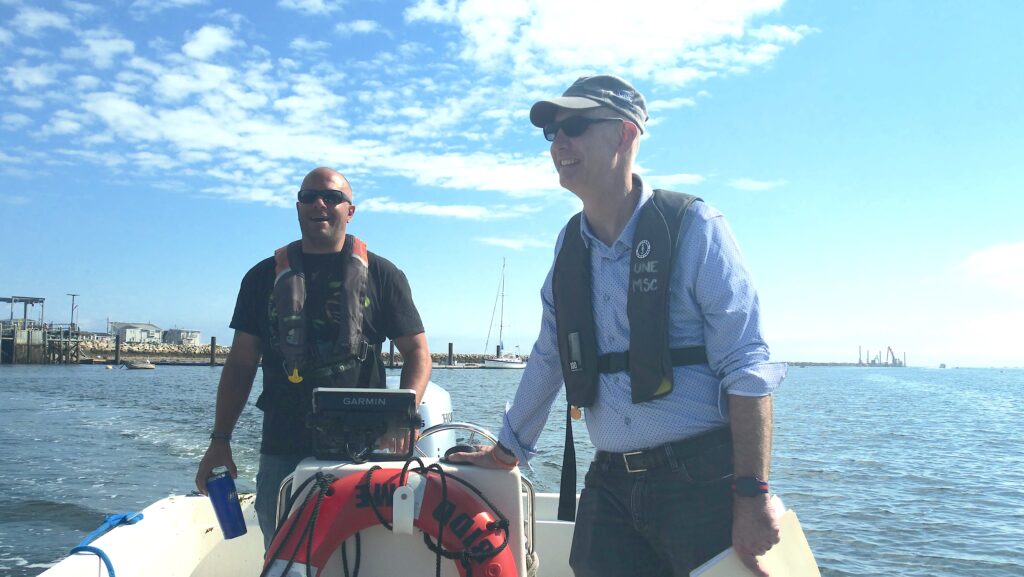
The goal was simple/not simple. Zuelow wanted to find a house.
Let’s back up.
One of the initial questions we’ve started with in this course deals with what appears to be a large house near where the Marine Science building now stands. Prior to the start of the semester, Zuelow and his 5-year-old daughter, Bridie (whose archaeological interests have resulted in a front yard dotted by 50×50 test pits), explored the riverfront on foot. After some messy triangulation, he’d convinced himself that the house could be just to the right of the current academic building.
Zuelow and Prof. Arthur Anderson then went to look at the possible site. There’s some levelish ground. Could possibly be the house site in an old photograph. Maybe? They wondered if the oldest looking pine tree at the location is the one to the right of the photo. Conceivably?
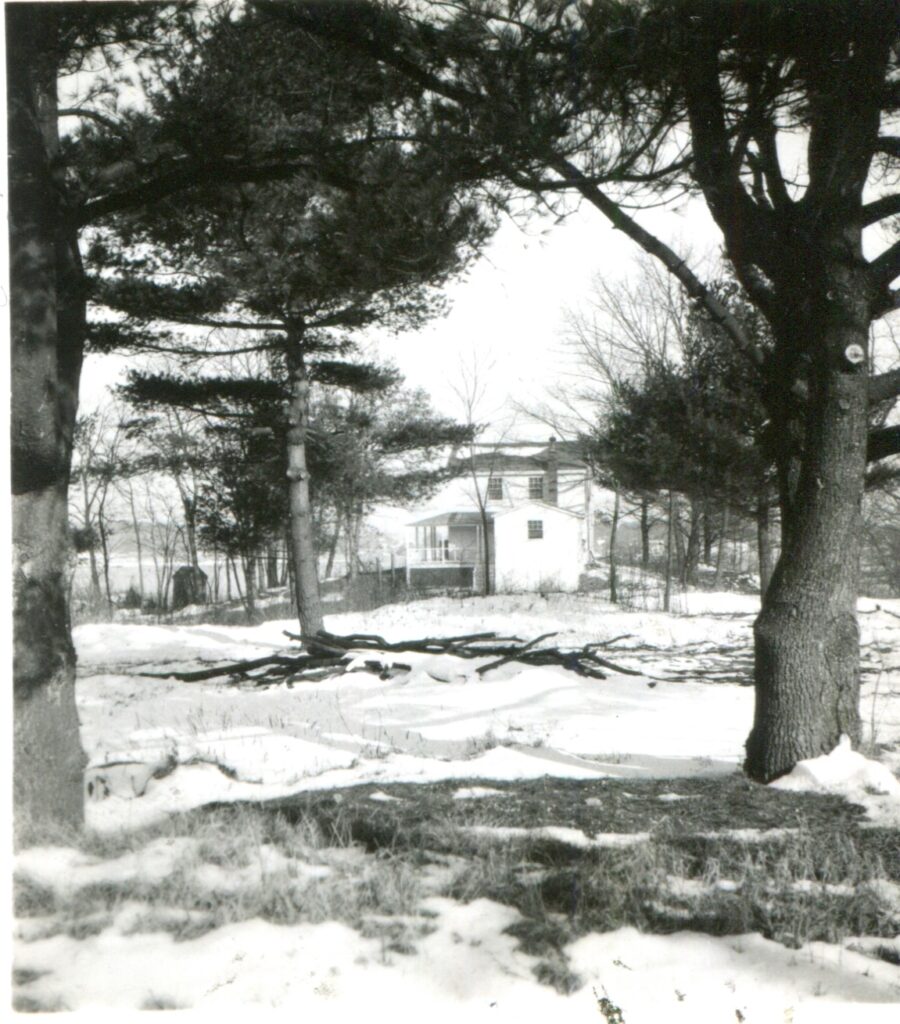
There was something nagging at them, though. Zuelow and his daughter had been on Freddie Beach, but not in nearly the right spot to get a real sense of things. Besides, the photo showing the house was taken from a dock in what is roughly the middle of the river. You want to find a house based on an old postcard, you’ve got to go to the spot the original photo was taken.
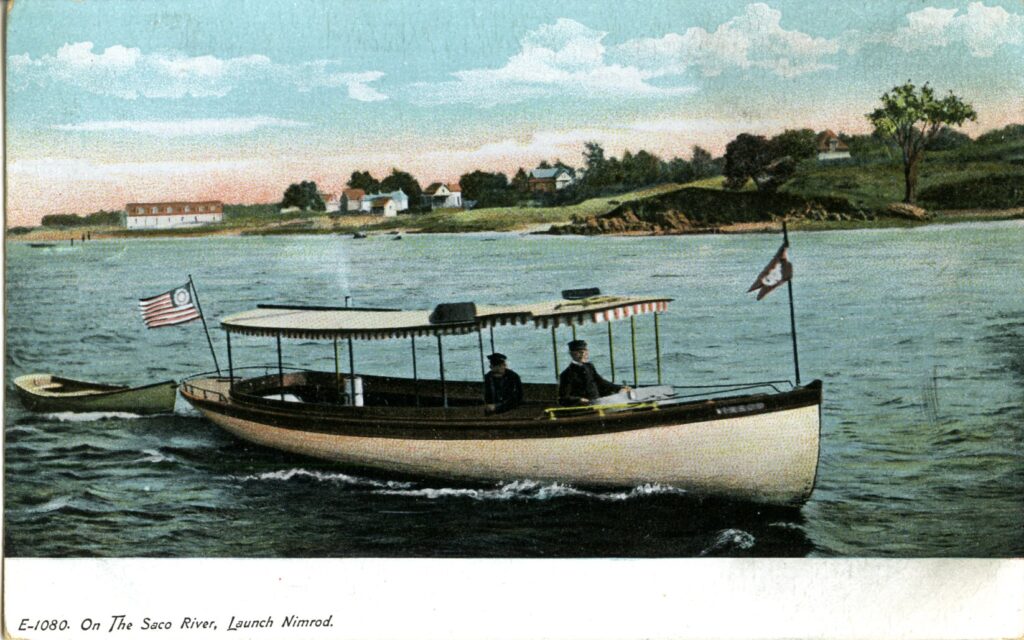
So Zuelow, Boulle, and Gregorius took the school’s small boat into the channel, locating where the famous Camp Ellis pier once stood.
It was clear very quickly that the house could not possibly have stood where Zuelow and Anderson hoped it did. It had to be further along the coast and, disappointingly, outside the area the class is engaged with this term: Jordan’s Point to Marine Sciences.
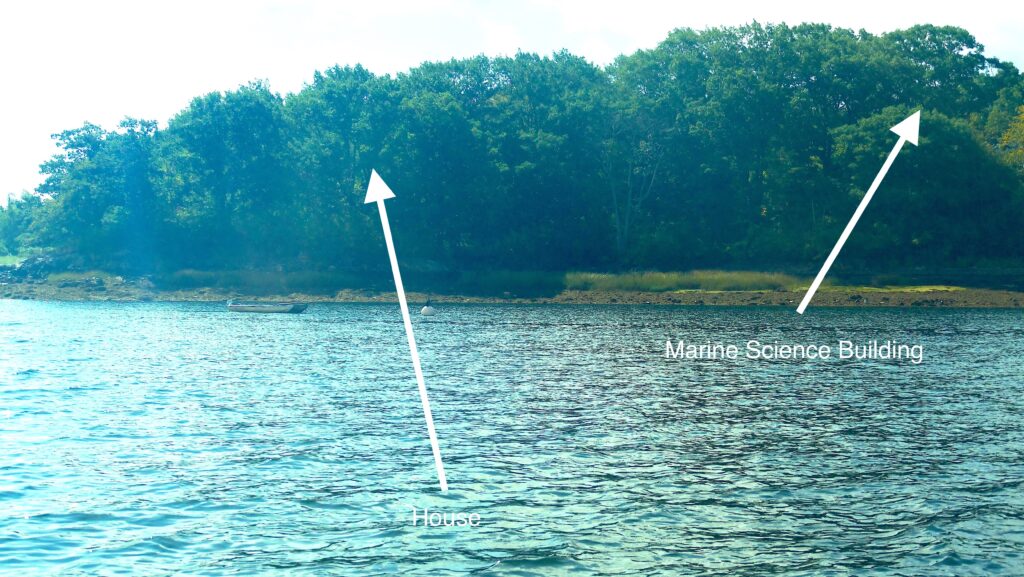
Still, it was worth another quick bit of investigation, so the Team went for a beach walk. We slid and slipped along, surveying the beach. There are deposits of brick, some remaining wooden structure of the jetty that once stood at Jordan’s Point (not to mention all of the original granite) which we’re keen to learn more about. There’s an odd metal fixture sticking from the rock face, near where the possible gazebo might have been. A promising start.
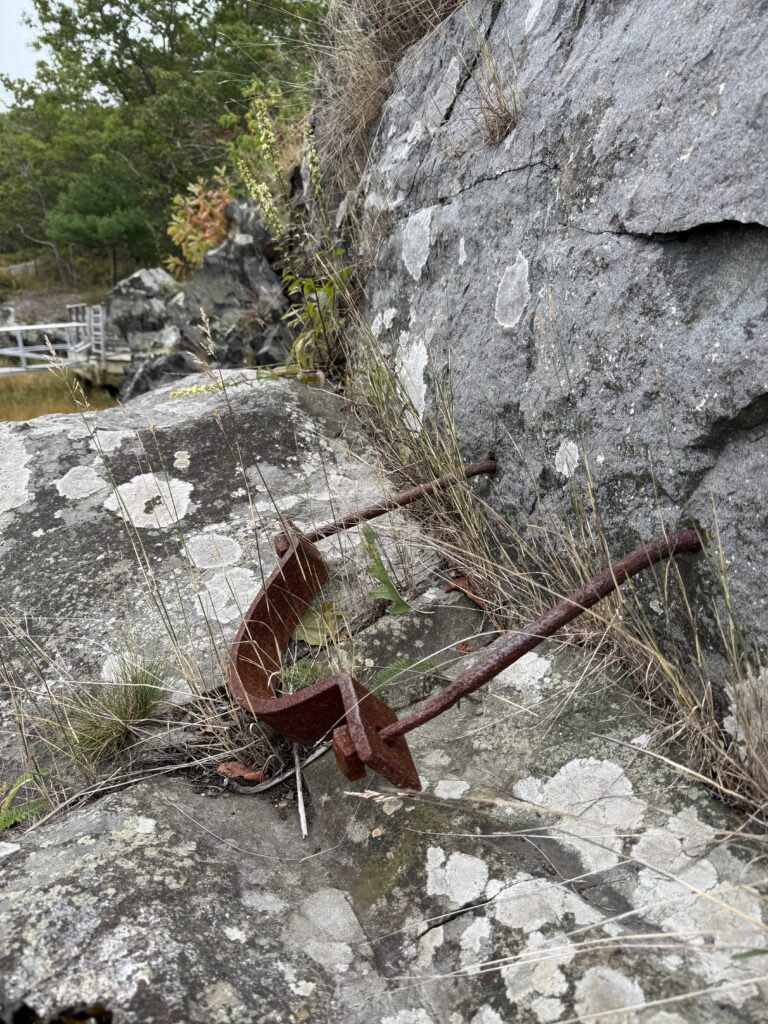
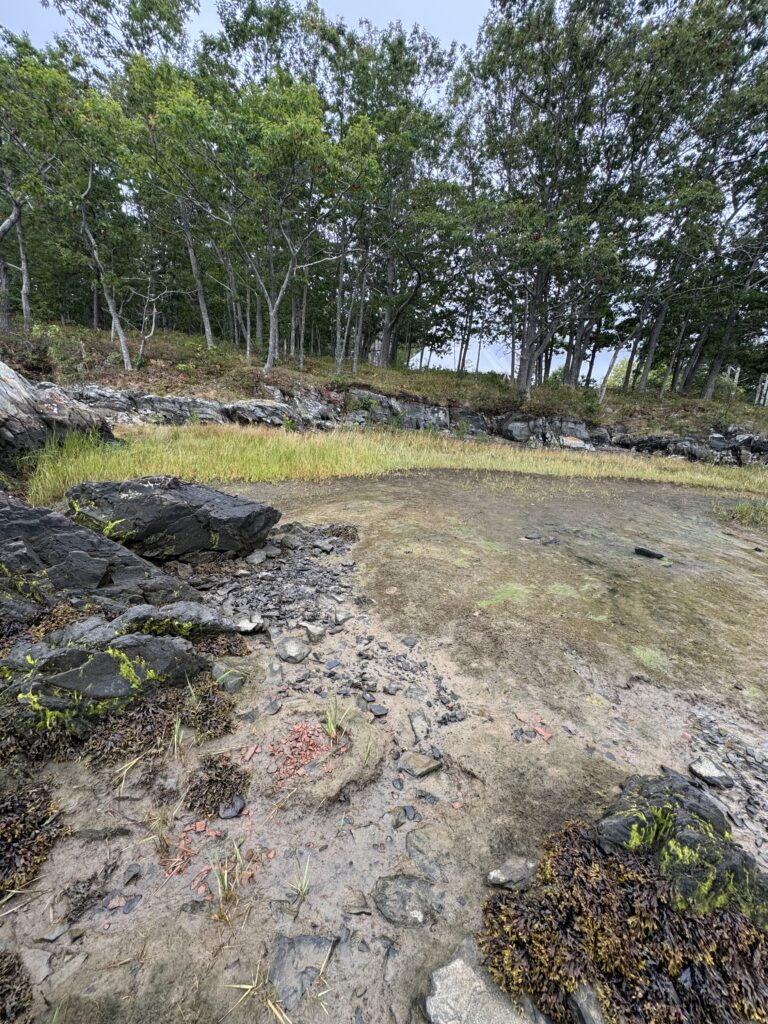
Then we headed up the hill to where the river trip findings suggested the house might be.
By heck… found it! There are even tantalizing foundations!
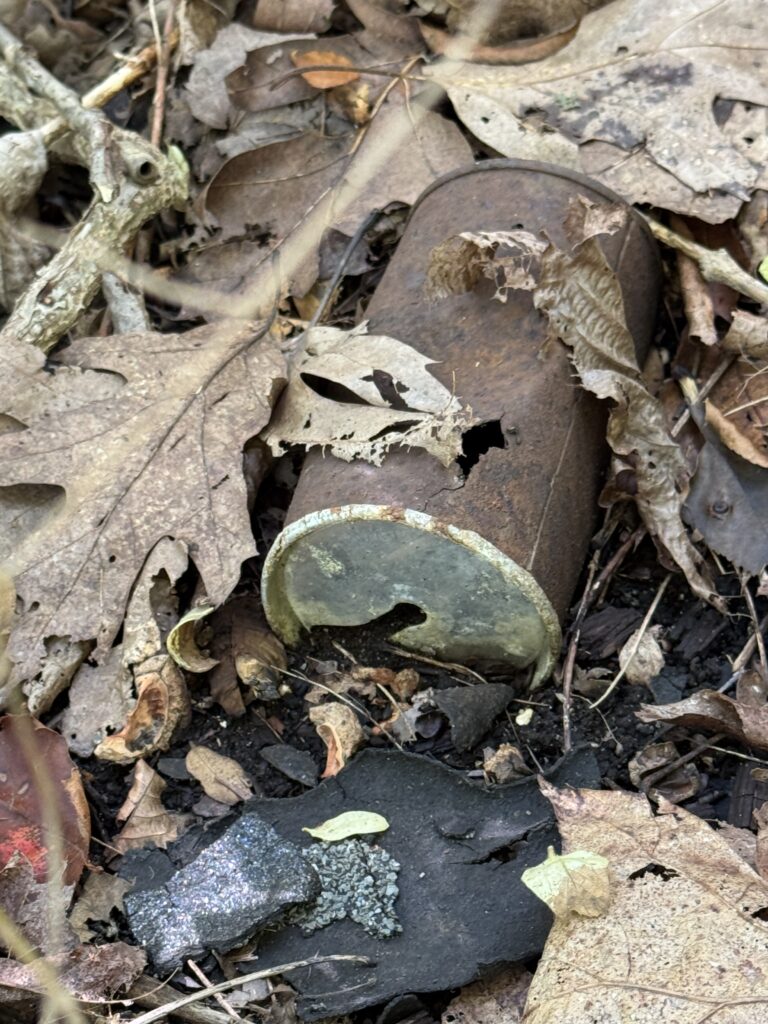
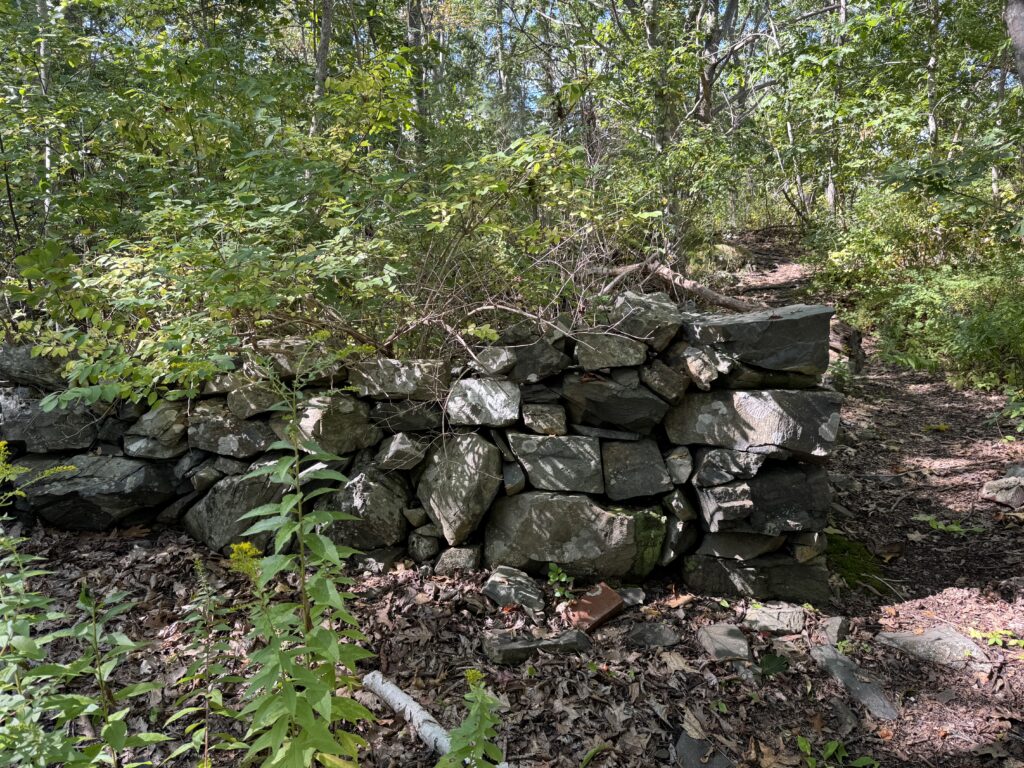
This is great news, but not for this term. We’re focused on a particular strip of land and this is beyond it….
The “Bigger House” will need to wait for another iteration of the class, and it promises to be a great investigation when we get to it.
Just a short distance further on from those foundations once stood something called the “Hills Beach House,” a bit of tourism history Zuelow, a tourism history specialist, is anxious to learn about. Was the house in the postcard associated with the beach house? What of the other structures around it?
Someday we’ll have just three days to find out…
Other activities
For now, though, we’ve got our strip of waterfront, and we devoted last week’s class session to preparing.
Professor Anderson started by teaching us the basics of stratigraphy, walking us through the fundamentals of archaeology.
Next, he passed out a collection of arrowheads, asking us to categorize them based on a typology established by extensive prior archaeology. It was not an easy task, but the students soldiered on with solid results.
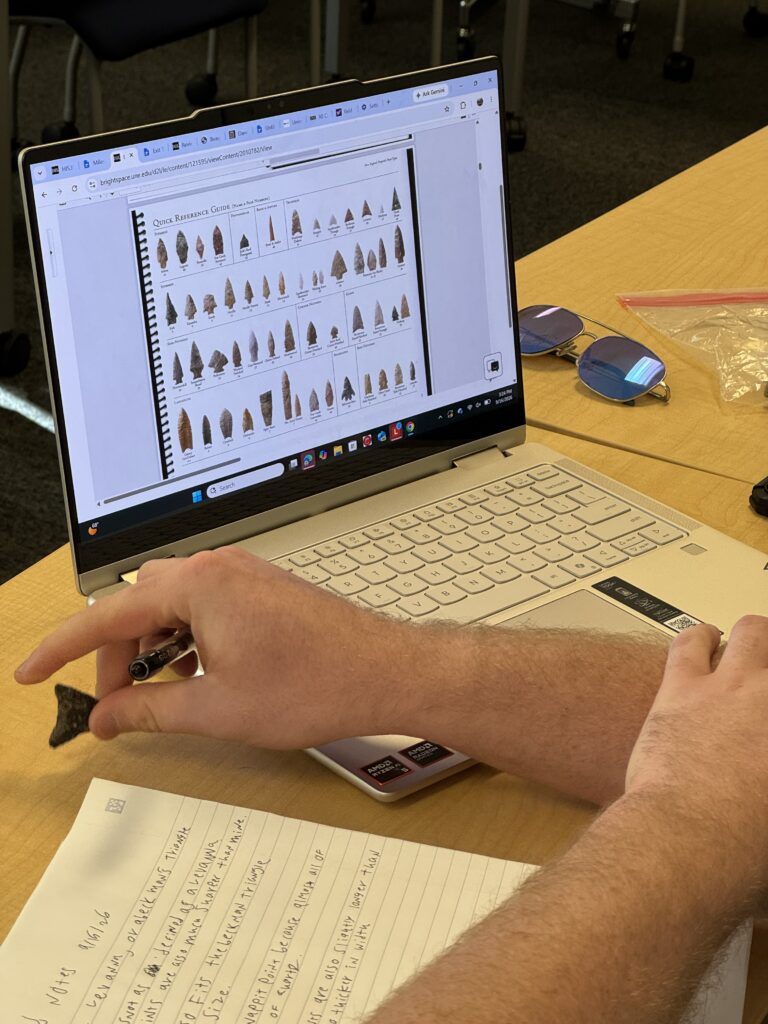
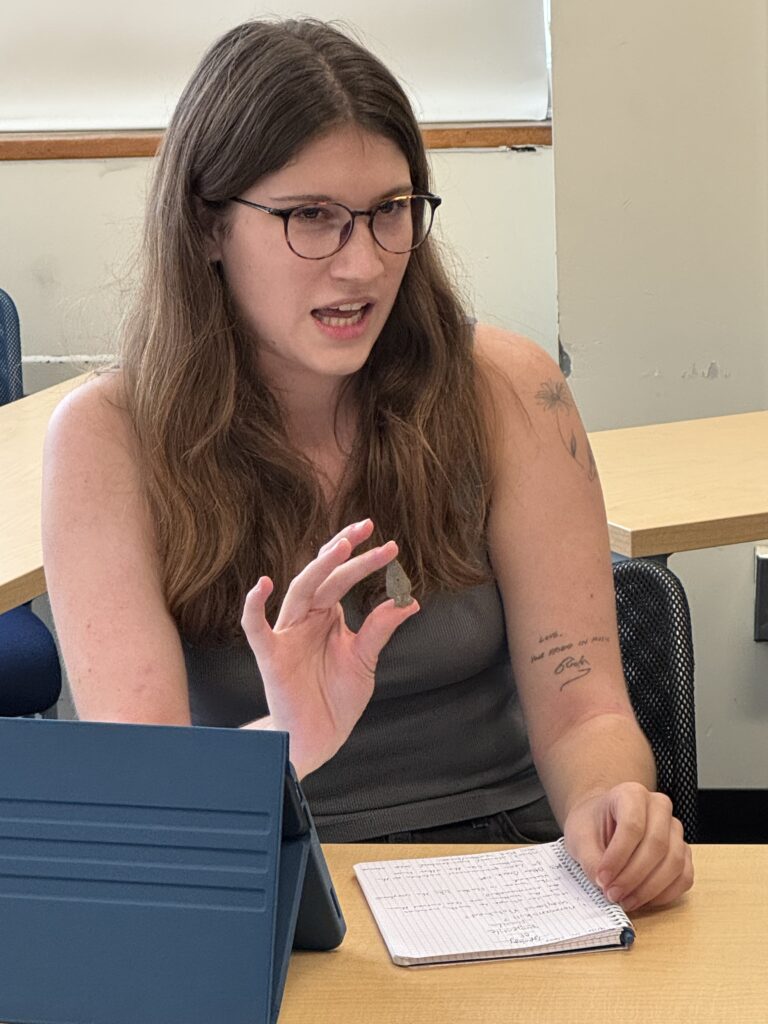
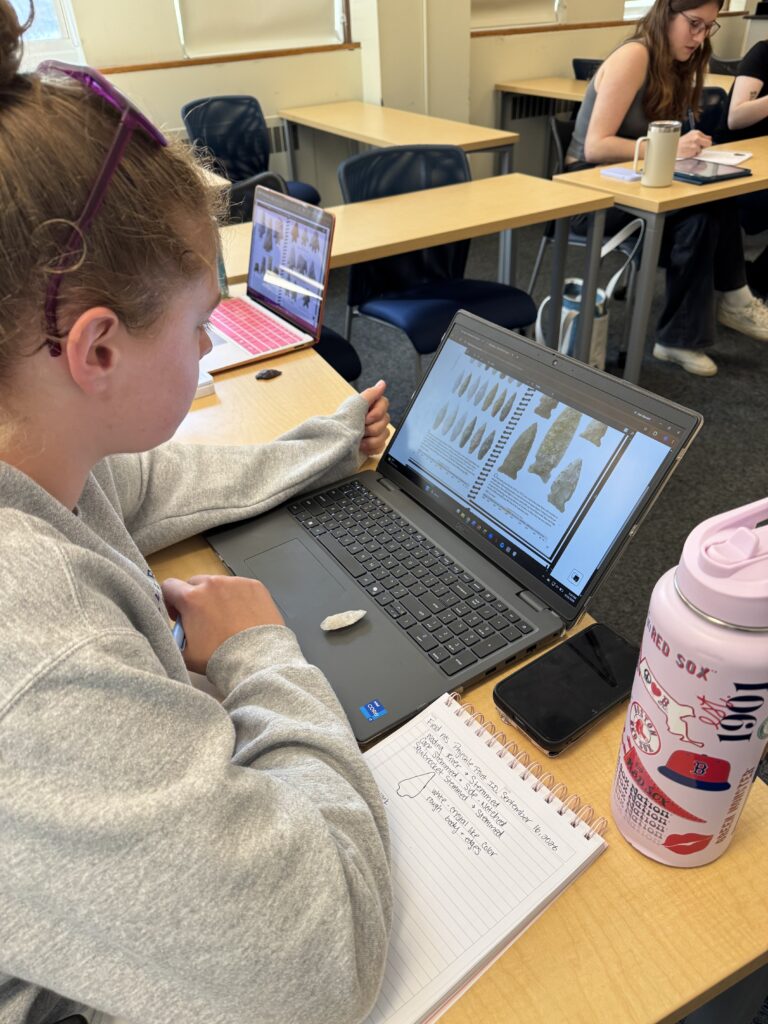
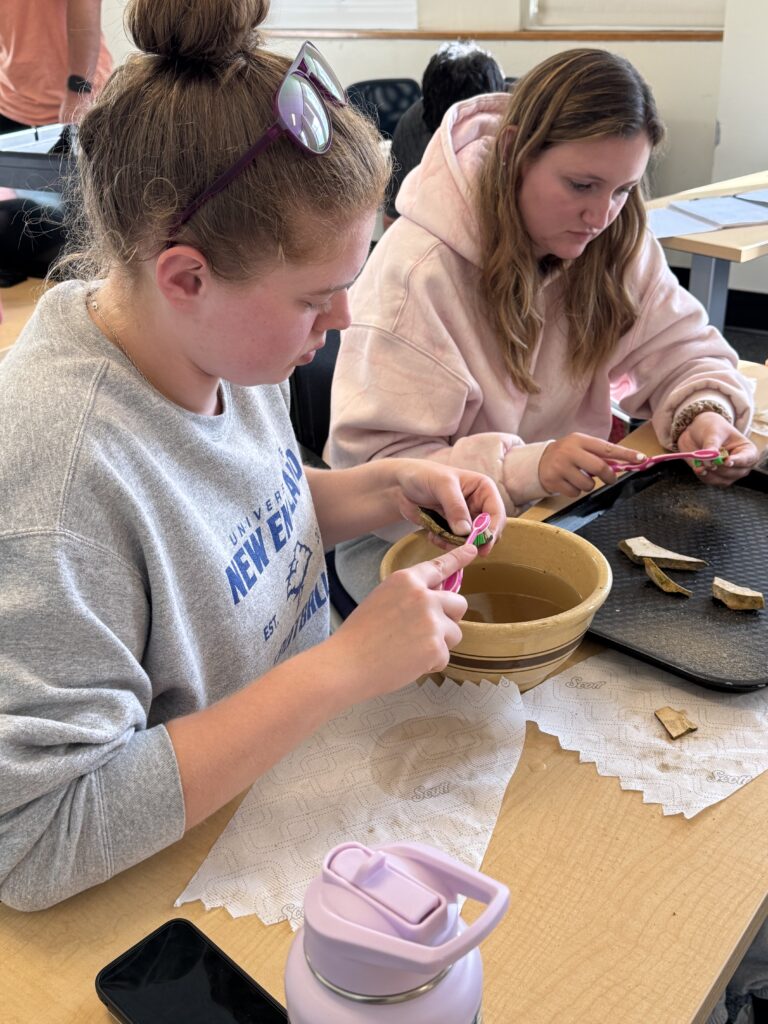
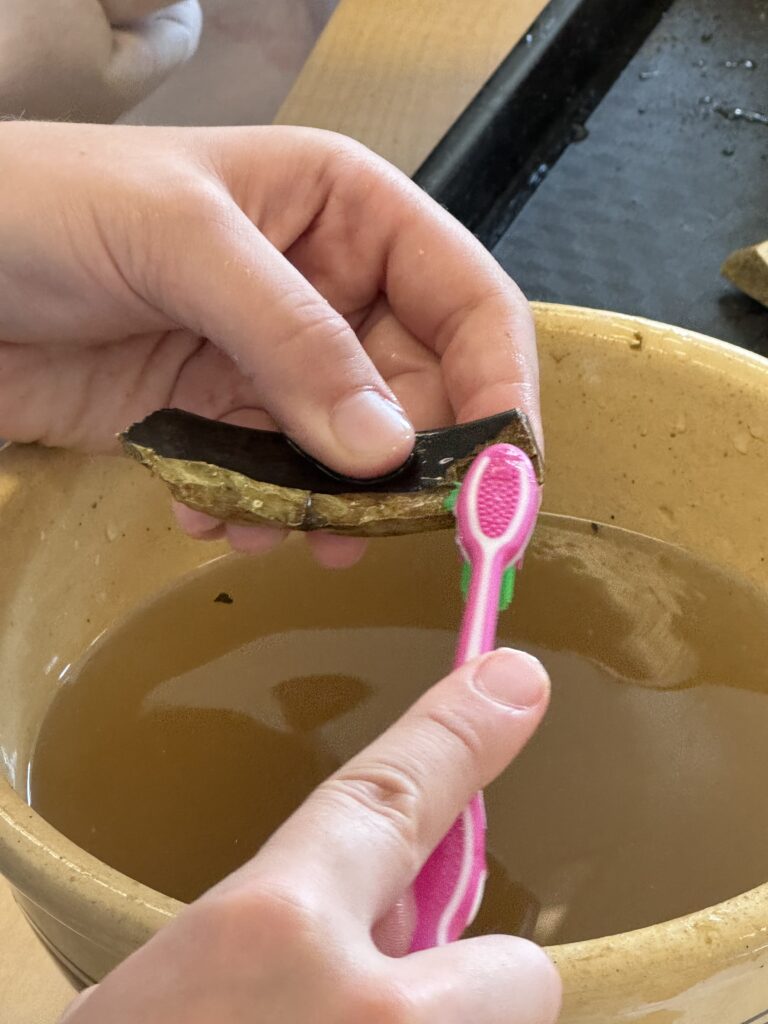
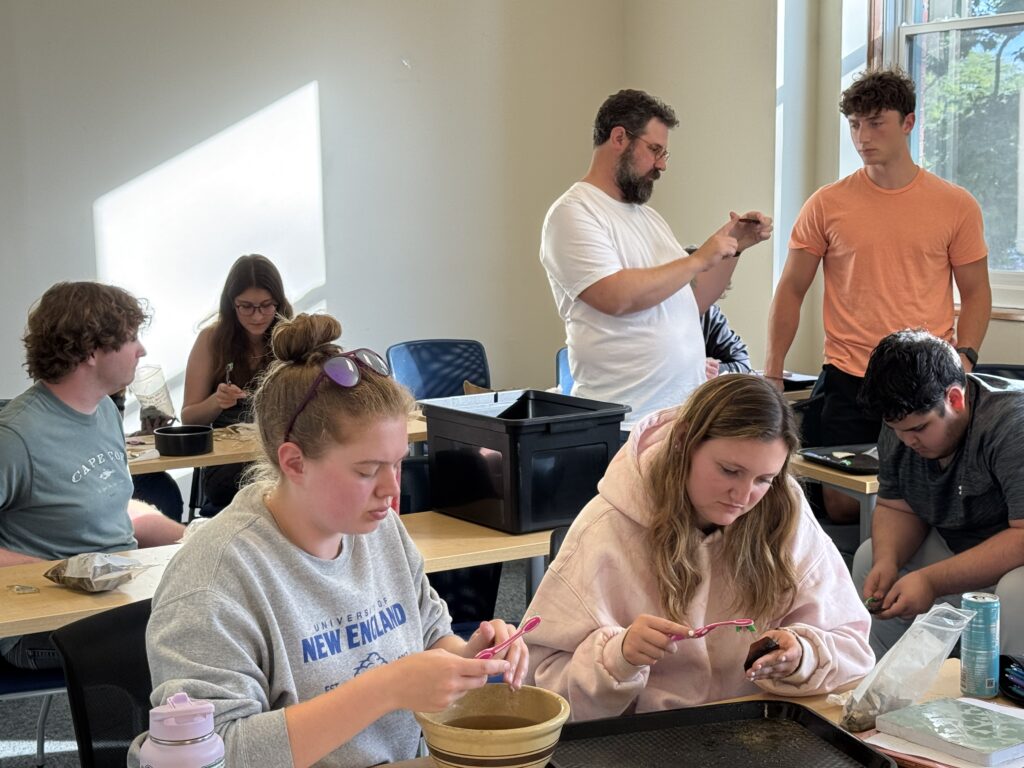
Finally, we broke into the extensive collection of finds gathered a year ago at Norwood’s Wharf (see earlier posts on this blog). The students scrubbed them and set about making identifications.
Most of the Wharf finds were acquired during a survey of the beach. Students in that class documented where the objects were found. Most were at the base of a cliff below what is today the UNE President’s House. From about 1820, that site was the Norwood family homestead.
As the glass, pottery, and other material emerged from muddy residues, a fascinating story of habitation emerged. There were electrical objects that spoke to evolving technology. Glass and pottery that reflected changing tastes and the rise and fall of various consumer goods. There was a bent up old spoon, a very personal object that might speak to family breakfasts and hot cups of soup vigorously swallowed following cold days on the water…
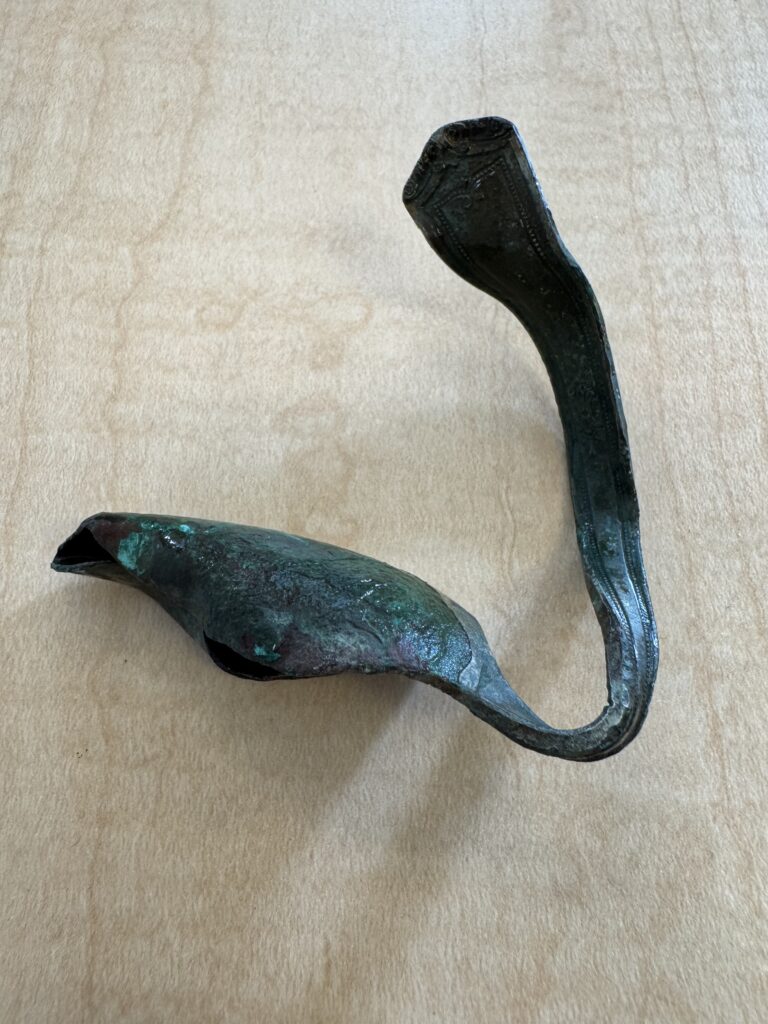
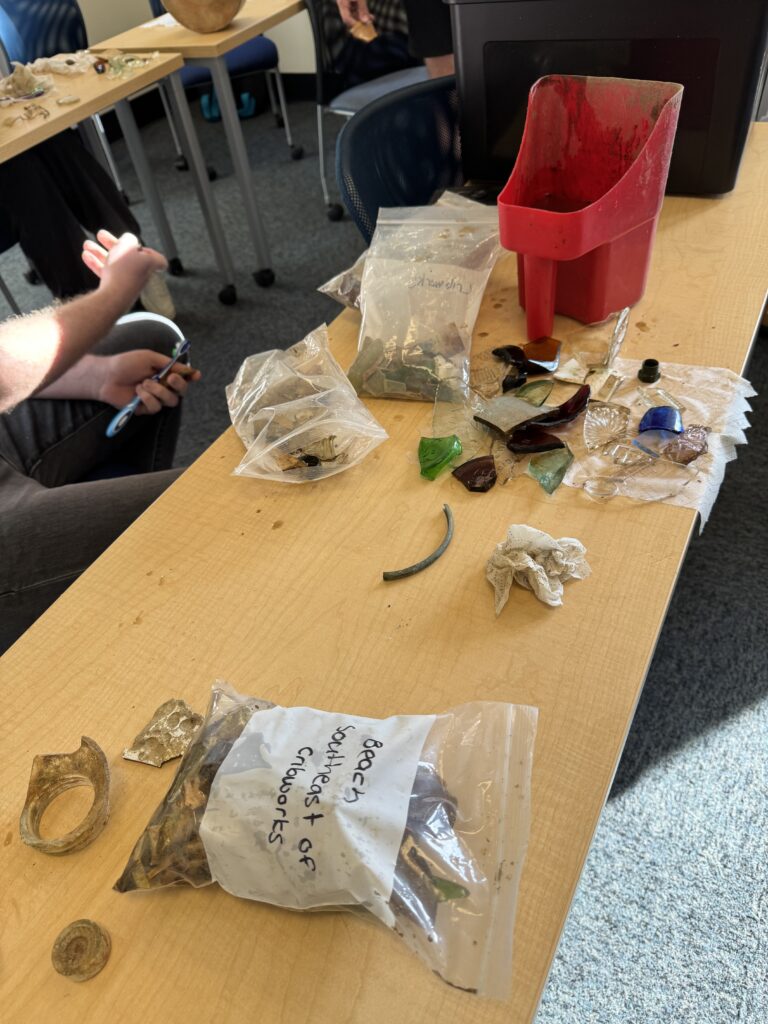
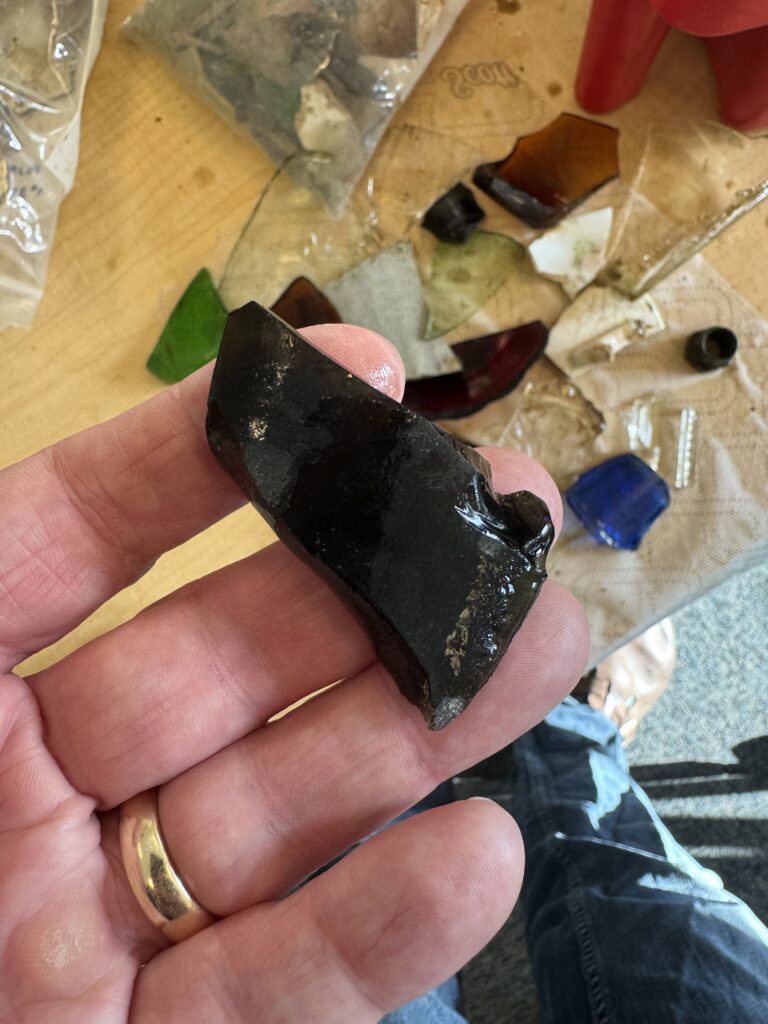
A timeline emerged from out of our artifact bags. The earliest objects, black glass, date to the 1820s when the Norwoods arrived from Cape Ann in Massachusetts. The latest material dates to the point when evolving ideas about the river and trash disposal caused people to stop discarding their rubbish into it, only about 50 years ago or so.
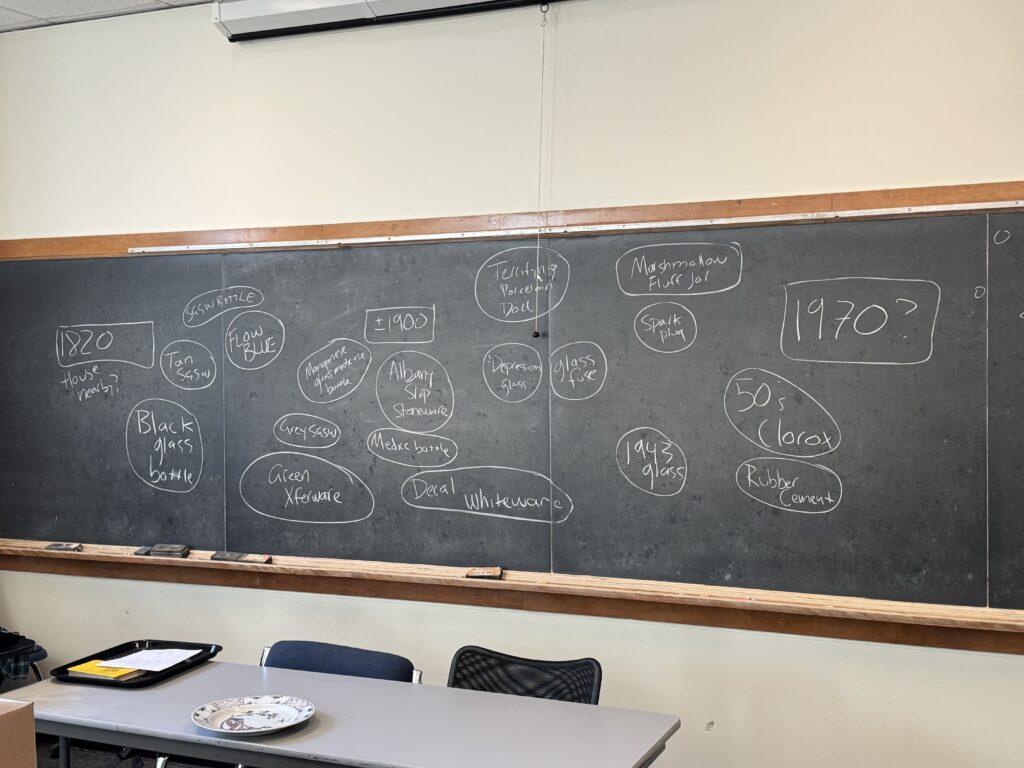
The riverfront we’re working with features a different physical geography from the Norwood’s Wharf site. We probably won’t find the same sort of distribution of objects. Nevertheless, working from what students uncovered last year we’ve got a nice sense of what we could find.
This Wednesday, we’ll start to find it.
— Prof. Eric G. E. Zuelow